
Gone are the days when monoculture farming was the only way to scale your agricultural production. When your farm depends on a single crop, it also means a single source of income. One pest attack, one price crash, or even one failed season can quickly bring massive losses to your investment.
An estimated $3.26 trillion in agricultural losses over 3 decades was incurred in recent years due to global disasters and post-harvest disruptions.
In this era, the shift is more towards developing better, more sustainable operational designs that enhance overall resilience and generate multiple revenue streams through the best agroforestry models and diversified farming systems.
If you are an investor or a landowner, building such critical agricultural systems with the help of K2 Farmland can deliver long-term productivity, diversified outputs, and greater land value optimization in the years ahead. Let’s discuss more about this.
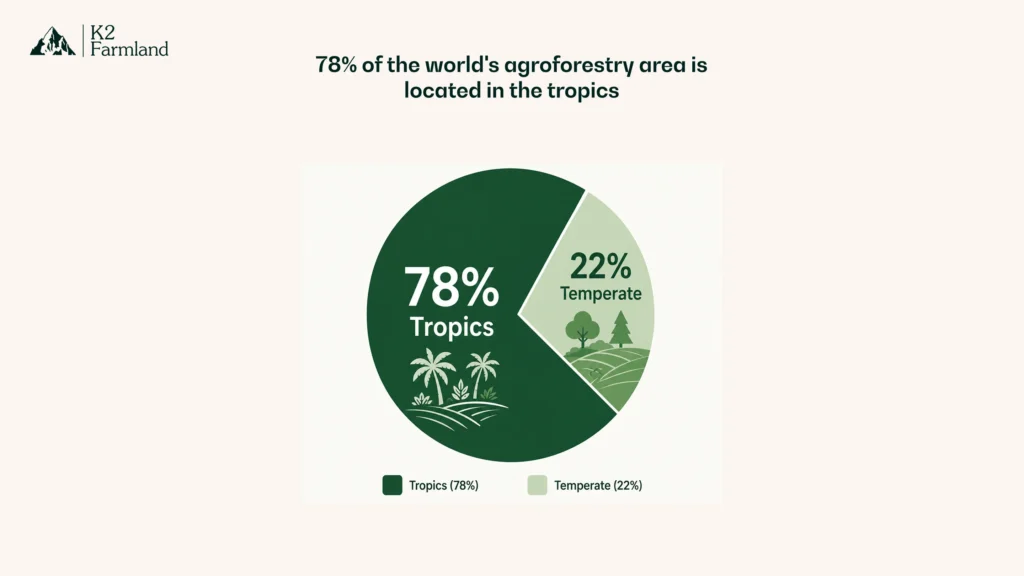
What Is Monoculture Farming?
With monoculture farming, your entire revenue generation depends on a single crop over large areas. This also encompasses simplified planting systems, irrigation, harvesting, and overall supply chain management.
For example, large-scale cultivation of crops such as wheat, corn, and sugarcane is carried out in isolated production systems. Rice, soy, or rice in isolated production systems.
However, there could be several long-term vulnerabilities that can hinder your revenue growth in the long run, like:
- Soil nutrient depletion
- Increased dependency on chemical inputs
- Higher pest and disease pressure
- Reduced biodiversity
- Greater climate sensitivity
- Revenue instability from market fluctuations
Now this agricultural simplicity definitely comes with a lot of ecological and financial resilience. Research from the FAO Agroforestry Module highlights how various kinds of integrated systems are tailored to bring long-term sustainability. This approach is based on strategically combining different kinds of crops, trees, and livestock.
Why Monoculture Systems Are Becoming Riskier?
Agricultural conditions in this era are markedly different from those of decades ago.
Farmers and investors are now dealing with:
- Climate unpredictability
- Water stress
- Rising fertilizer costs
- Soil degradation
- Export volatility
- Shifting consumer demand
- Carbon and sustainability regulations
A single-output farming system struggles to absorb these shocks. For example, if your farm depends solely on one seasonal crop and, in a given year, the yield declines sharply, the financial impact will be significant.
Now, diversified farming systems will help you cover losses by spreading your productivity and investments across multiple assets and timelines in the right way.
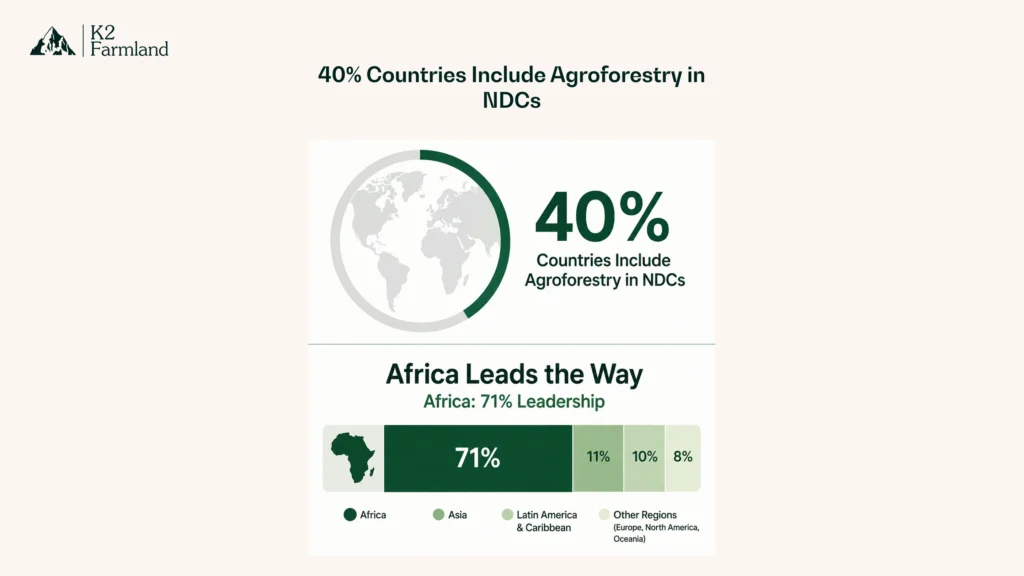
What is an Agroforestry Model?
In an agroforestry model, you can cultivate a wide variety of trees, crops, and sometimes even livestock within the same land management system.
By combining both with the latest technologies, you can witness a massive hike in overall productivity, biodiversity, and economic resilience.
Depending on the region and investment objective, your upcoming agroforestry model may include:
- Timber trees with seasonal crops
- Fruit orchards with ground crops
- Livestock grazing between tree rows
- Multi-layer plantation systems
- Silvopasture systems
- Mixed horticulture systems
The goal is not simply diversification for appearance. The real objective is to create operational synergy among the different components of the farm.
According to the Food and Agriculture Organization (FAO), agroforestry systems improve soil health, carbon sequestration, climate resilience, and economic sustainability simultaneously.
How Diversified Farming Creates Multiple Revenue Streams?
One of the biggest advantages of diversified farming is that income no longer depends on a single harvest cycle. Instead, revenue is distributed across short-term, medium-term, and long-term outputs.
For example:
| Farming Component | Revenue Timeline |
| Seasonal crops | Short-term income |
| Fruits and horticulture | Medium-term income |
| Timber and hardwood trees | Long-term growth asset |
| Livestock and dairy | Recurring cash flow |
| Carbon and sustainability value | Emerging long-term potential |
This layered revenue structure creates way better operational flexibility while generating consistent cash flow throughout the year.
Components of a Successful Diversified Farming System
- Land Assessment
Every successful system starts with understanding the land itself.
This includes:
- Soil quality
- Water availability
- Climate patterns
- Topography
- Existing vegetation
Without this foundation, diversification becomes guesswork rather than strategy.
- Crop And Tree Selection
The species selected must work together operationally and economically.
A strong agroforestry model balances:
- Short-term productivity
- Long-term asset value
- Local climate suitability
- Market demand
- Financial Planning
Multi-revenue systems require staged financial thinking. Some outputs generate early cash flow while others mature over the years. Investors need realistic timelines and operational forecasting.
- Risk Distribution
Diversified farming works best when all potential risks are intelligently spread across the system. If one crop underperforms in a certain year, other revenue channels can quickly stabilize operations.
- Sustainability Integration
Long-term productivity depends mainly on soil regeneration, biodiversity, and overall water conservation. Modern diversified systems are now designed with sustainability as a priority rather than treating it as a separate initiative.
Financial Benefits of Multi-Revenue Agricultural Models
The financial value of diversified farming extends beyond immediate crop sales.
These systems can contribute to:
- Improved land productivity
- Reduced input dependency
- Better climate resilience
- Lower operational volatility
- Enhanced long-term land value
- Stronger investor confidence
Tree-based agricultural systems also create asset appreciation over time. Timber species, fruit orchards, and perennial crops add long-duration value that traditional monoculture systems often lack.
For agricultural investors, this creates a more balanced portfolio structure within the land itself. Instead of relying on one annual cycle, the farm becomes a layered production ecosystem.
Why Investors Are Paying Attention to Agroforestry?
Agricultural investment strategies are evolving rapidly.
Investors are no longer evaluating farms only by seasonal crop output. They are increasingly looking at:
- Land resilience
- Water security
- Carbon potential
- Long-term productivity
- Operational sustainability
- Diversified income generation
An agroforestry model aligns with many of these priorities by combining ecological restoration with economic productivity.
Organizations and agricultural policymakers worldwide are also encouraging diversified land-use systems due to their climate and biodiversity benefits.
This shift is creating greater interest in professionally managed agricultural investment opportunities that prioritize long-term operational design.
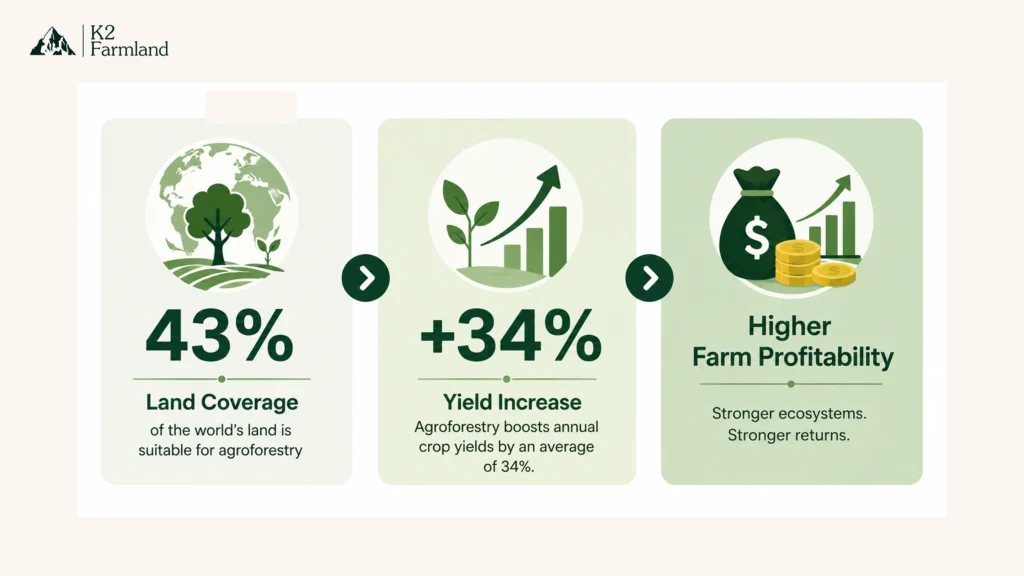
How K2 Farmland Supports Long-Term Agricultural Investment Strategies?
Building a strong and comprehensive agroforestry model is all about strategic operational planning, long-term management, sustainability integration, and more. Here, K2 Farmland identifies and develops potential agricultural opportunities that are bound to bring long-term productivity and resilience to your agricultural investments.
This includes:
- Structuring agriculture-led investment opportunities that are carefully designed to support long-term land productivity and operational scalability.
- Diversified farming and multi-revenue agricultural models ensure that your investments are not limited to a single crop cycle and bring more revenue-generating opportunities.
- Complete operational sustainability will help to enhance overall soil health and long-term agricultural performance.
- Building solid investment strategies that bring effective financial returns even after different climate variability and market fluctuations.
- Exploring a wide range of scalable agricultural systems and frameworks based on future-ready farming solutions and growing agricultural demands.
As the industry continues to evolve, the need for more professionally managed investment models is increasing among investors. Thus, K2 Farmland brings a solid understanding and a strategic approach that can be extremely important to fuel long-term revenue generation.
FAQs
What is an agroforestry model?
An agroforestry model is a combination of different kinds of trees, crops, and sometimes livestock within the same farming system to improve productivity, sustainability, and multiple revenue streams.
How does diversified farming reduce risk?
Diversified farming reduces dependency on a single crop or income source. You get to earn even when one of your crops performs poorly.
Is agroforestry even profitable for investors?
Yes, agroforestry can actually support long-term profitability through diversified outputs such as a wide range of crops, fruits, timber, livestock, and improved land value over time.
What are multiple revenue streams in agriculture?
Multiple revenue streams refer to earning income from different agricultural components simultaneously. This includes several crops, trees, livestock, horticulture, and other value-added products.
Why is monoculture farming becoming less sustainable?
Monoculture farming often leads to severe soil degradation, biodiversity loss, greater chemical dependence, and increased vulnerability to climate and market disruptions.
Can agroforestry improve soil health?
Yes, agroforestry systems can actually help improve overall soil fertility, moisture retention, nutrient cycling, and erosion control through their integrated land management practices.
What is the biggest advantage of diversified farming?
The biggest advantage here is resilience. Diversified systems create way more stable income opportunities while maintaining environmental sustainability and long-term land productivity.
Conclusion
Your agricultural investments should focus on generating multiple revenue streams simultaneously in varied environmental and economic conditions. And a strong agroforestry model actually helps you with that. They bring multiple revenue streams, long-term resilience, and smarter land utilization.
K2 Farmland manages your investments using the best technologies and systems to ensure they thrive over the next decades, regardless of factors like the economy, climate, etc.
Key Takeaways:
- Diversified farming reduces dependency on a single crop or market cycle. This creates stronger financial resilience during climate disruptions or price volatility.
- An agroforestry model combines ecological sustainability with economic productivity. It allows farms to generate income from crops, trees, livestock, and other integrated outputs.
- Operational design plays a critical role in agricultural outcomes. Well-planned systems improve land productivity, water management, and long-term profitability.
- Multiple revenue streams create a more stable agricultural cash flow. Short-term and long-term income sources work together to reduce financial pressure.
- Agricultural investment strategies are evolving beyond monoculture systems. Investors are increasingly prioritizing resilience, sustainability, and long-term land value creation.